AEO-Optimized Landing Pages: Best Practices
Master AEO landing page best practices to get cited by AI engines. Learn to structure content, use schema, and target multiple buyer personas for success.

AthenaHQ
Action on AI Search
AEO-Optimized Landing Pages: Best Practices
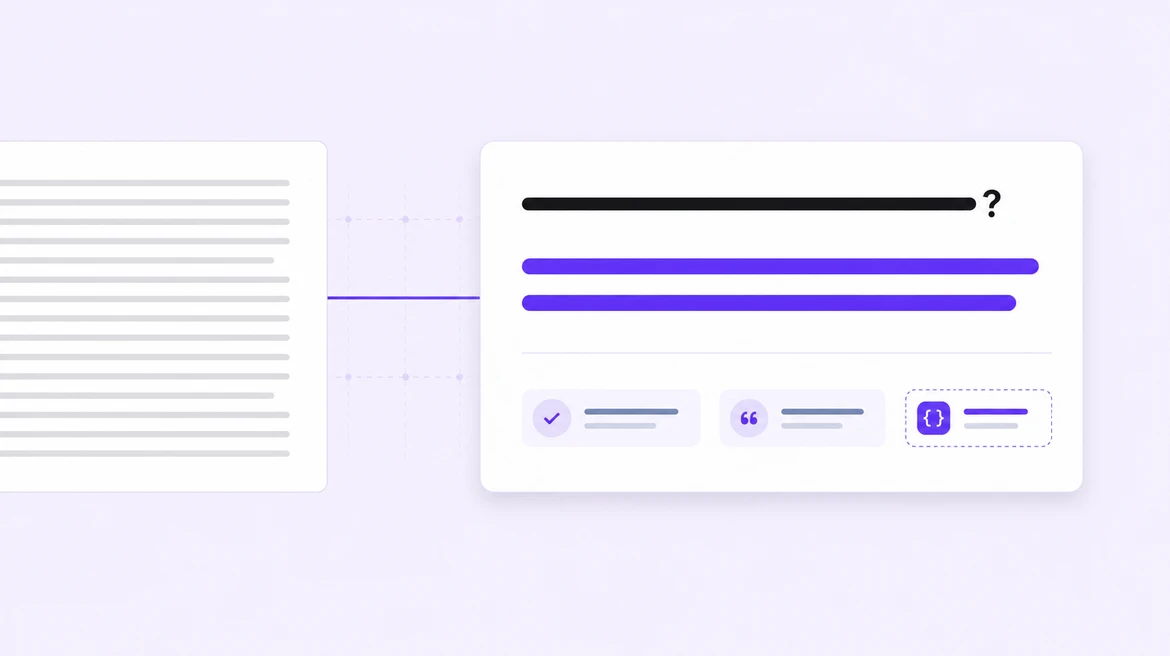
An AEO-optimized landing page is structured to directly answer a specific user query, with a concise answer up top, question-based headings, schema markup, and citable facts, so AI engines can extract and cite it as a source.
AI answer engines now sit between your brand and your buyers, synthesizing responses and citing only a handful of sources. If your landing page isn't one of them, you lose the visibility a top-ten ranking used to guarantee. This guide walks through the best practices for creating AEO-optimized landing pages, from structure and schema markup to serving multiple personas and measuring results.
What Makes a Landing Page AEO-Optimized?
An AEO-optimized landing page is a page structured to directly answer a specific user query so AI engines can extract, understand, and cite it. It prioritizes clarity, structured data, and citable facts. It aims to become the source an answer engine quotes when responding to a real question.
Answer Engine Optimization (AEO) is the practice of formatting content so it gets pulled into AI-generated responses, not just listed in a set of blue links. The difference is subtle but important. Traditional search sends a user a list and lets them choose. An answer engine reads your content, decides whether it is clear and trustworthy, then either quotes it or skips it. Contentstack notes that AEO differs from SEO's focus on earning clicks, since the goal is being extracted and cited inside the answer itself [1].
The shift is real and measurable. AI engines now handle a large and growing share of everyday queries, and Gartner forecast in 2024 that traditional search engine volume will decline by roughly 25% by 2026 as more people get direct answers from AI. When answers replace link lists, being the cited source becomes the primary objective.
AEO vs. SEO: Key Differences for Landing Pages
AEO and SEO share a foundation, but they optimize for different outcomes. The table below breaks down where they diverge.
The overlap matters too. A page that loads fast and reads well still helps you, since Synscribe explains that modern pages need to serve both traditional SEO and AI-driven approaches at the same time [2]. Think of AEO as a layer you add on top of solid SEO fundamentals.
What Are the Best Practices for Structuring an AEO-Optimized Landing Page?
The best practices for creating AEO-optimized landing pages come down to structure. AI engines reward pages they can parse cleanly, where every question has a direct answer nearby and the layout follows a predictable pattern. Use the checklist below as a working blueprint for writers and developers.
The AEO Landing Page Structure Checklist
A strong AEO page follows a logical flow that puts the answer first, then backs it up. The seo-hacker model recommends this sequence [3]:
- Hero section with a primary question and direct answer. Lead with the exact question your visitor is asking, then answer it in a concise, quotable sentence or two. This is the passage AI engines are most likely to lift.
- Proof layer. Follow the answer with testimonials and data points that verify the claim you just made.
- How it works section. Explain the process or product in clear, sequential steps so both readers and AI can trace the logic.
- Feature and benefit blocks. Pair each feature with the concrete outcome it delivers, keeping the language specific.
- Trust and authorship section. Show who is behind the page, with author credentials, company background, and citations to authoritative sources.
LSEO reinforces this order, advising a predictable layout that starts with the core answer, then adds supporting details, proof, and a clear call to action that matches user intent [4].
Content and Formatting for AI & Human Readers
Formatting is where many pages win or lose. AI engines scan for structure, so make your page easy to break into extractable pieces.
- Write descriptive, question-based headers. Turn each H2 and H3 into a real question your audience asks, then answer it immediately underneath.
- Place a concise answer right after each question. Aim for 40 to 60 words before you expand, so the engine can grab a clean, self-contained response.
- Use scannable lists and short paragraphs. Bulleted steps and tight paragraphs parse far more reliably than dense blocks of text.
- Lead with strong trust signals. Statistics, expert quotes, and customer reviews give AI models the factual anchors they prefer to cite.
Position Digital makes the same point in its 2026 best practices, stressing detailed company information and comprehensively answering user questions to become a trusted source for AI models [5]. The goal is a page that reads naturally for humans and slices cleanly for machines.
Technical Elements: The Role of Schema Markup
Schema markup is structured data you add to your page's code to spell out what your content means. It tells an AI engine, in a language it understands, that a block of text is a FAQ, a set of steps, or a product with a price and rating. Contentstack recommends JSON-LD schema as a core AEO strategy, alongside server-side rendering so crawlers can read your content without waiting on JavaScript.
Focus on these schema types for a landing page:
- FAQPage schema for your question-and-answer blocks, so each pairing is machine-readable.
- HowTo schema for step-by-step processes, like your "how it works" section.
- Product schema for pricing, ratings, and availability, which matters for shopping and comparison queries.
- Organization schema to define your brand as a clear entity with a consistent identity across the web.
Adding schema by hand across many pages gets tedious fast. Platforms like AthenaHQ help automate structured data implementation and flag where your markup is missing or misaligned, so your team can move faster without sacrificing accuracy.
How Do You Create AEO Content for Multiple Buyer Personas?
Most landing pages serve more than one type of buyer, and each one asks different questions. The best practices for creating AEO content for multiple buyer personas start with a simple persona-mapping framework that keeps your page organized and complete.
Build a grid. Put 2 to 4 core personas across the top, then list the buyer journey stages down the side: Awareness, Consideration, and Decision. This gives you a matrix of cells to fill.
Populate each cell with the specific questions that persona would ask at that stage. A technical evaluator in the Decision stage might ask about API access and security certifications. A budget owner in the Awareness stage might ask what the category even is and why it matters. Writing out these real questions turns a vague audience into a concrete content plan.
Once the grid is full, create dedicated content blocks or FAQ-style sections on the landing page for each persona's most critical questions. Group them clearly, and answer each one directly beneath its question. This structure guides human readers to the answers they care about. It also gives AI engines clean, self-contained passages to parse and cite for very different query types.
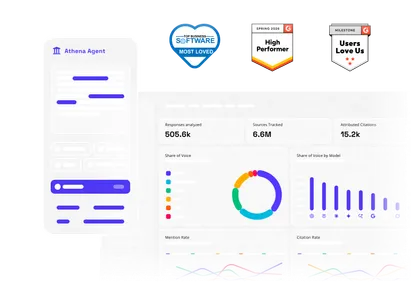
To see whether the strategy is working, you need to track performance by persona. AthenaHQ lets you filter and optimize for specific audience personas by buyer role, so you can see which questions your page wins on ChatGPT versus Perplexity, and where a particular persona's queries still lack a citable answer. That feedback loop tells you which cells in your grid need stronger content.
How to Measure and Improve Landing Page Performance with AthenaHQ
Best practices only pay off when you can measure their impact and act on the gaps. This is where a dedicated AEO platform turns your checklist into an ongoing, responsive workflow.
Start with citation prediction. AthenaHQ's Athena Citation Engine (ACE) scores your passages against your category so you can prioritize which answers to strengthen first. Pair that with content gap analysis, which surfaces the questions AI cannot currently answer about your business. Each gap is a concrete optimization opportunity you can fill with a new content block.
To track the AEO metrics that matter, use AthenaHQ's Brand Intelligence to monitor:
- Brand mentions across ChatGPT, Perplexity, Gemini, Claude, Google AI Overviews, and more, so you know where you appear.
- Citation sources, so you can see exactly which pages AI engines cite for your category and reverse-engineer what earns inclusion.
- Sentiment, so you understand not just whether you are mentioned but how you are described.
If you are still choosing a platform, it helps to compare your options. Our roundup of the Top 10 Generative Engine Optimization Tools To Try in 2026 walks through the leading tools and what each does well, and our list of the best GEO optimization platforms for startups is a good starting point for smaller teams. For head-to-head detail, see how AthenaHQ stacks up in our AthenaHQ vs. Profound comparison and our AthenaHQ vs. Peec AI comparison. The right platform gives you API access and scalable, reliable tracking you can act on, rather than a passive dashboard.
The pattern that produces compounding results is consistency: measure your citations, act on the gaps, then measure again.
Frequently Asked Questions
What is the main difference between AEO and GEO (Generative Engine Optimization)?
AEO focuses on getting your content cited as a direct answer inside AI engines like ChatGPT and Google AI Overviews. GEO is the broader practice of optimizing your entire brand presence across generative engines, including how you are described and recommended, not just quoted. In practice they overlap heavily, and most teams pursue both together on a single platform.
How long does it take to see results from AEO landing page optimizations?
Timelines vary by how often AI engines re-crawl your content and how competitive your category is. Some brands see movement within weeks. Structural changes like schema and answer-first formatting tend to register faster than authority-based gains, which build over a longer period.
Can I optimize existing landing pages for AEO, or do I need to create new ones?
You can almost always optimize existing pages, and that is usually the faster path. Retrofit them with the structural fixes covered above: question-based headers, answer-first formatting, the right schema, and stronger trust signals. Build new pages only when a persona or query has no logical home on your current site.
What are the most important schema types for an AEO-optimized landing page?
FAQPage schema is the highest priority, since it maps your question-and-answer blocks directly to how AI engines search for answers. Add HowTo schema for step-based content, Product schema for pricing and reviews, and Organization schema to define your brand as a clear entity. Implement all of them in JSON-LD format for the cleanest parsing.
How do you measure the success of an AEO landing page?
Track citations and brand mentions across AI engines, AI referral traffic reaching your site, and your share of voice against competitors for target queries. Sentiment tracking adds another layer, as described in the Brand Intelligence section above. A platform like AthenaHQ connects these signals to traffic and conversions so you can tie AEO work to business outcomes.
Citations
- https://www.contentstack.com/blog/ai/how-to-optimize-content-for-ai-answer-engines-aeo
- https://www.synscribe.com/blog/optimize-landing-page-aeo-geo
- https://seo-hacker.com/aeo-landing-page-optimization
- https://lseo.com/answer-engine-optimization-services/the-best-landing-page-structure-for-aeo
- https://www.position.digital/blog/answer-engine-optimization-best-practices
Become the Brand AI Trusts
See, Act, and Win on AI Search and Beyond
Keep Reading
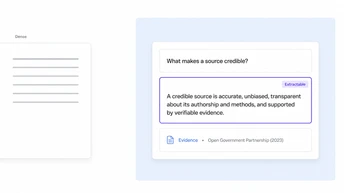
How to Optimize Content for AI Search Engines
Learn how to optimize content for AI search engines. Get cited by Google AI Overviews & ChatGPT with our step-by-step Generative Engine Optimization guide.
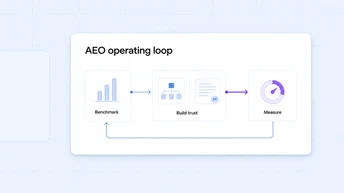
The Enterprise Guide to Answer Engine Optimization (AEO)
Enterprise guide to Answer Engine Optimization (AEO). Learn how to gain a competitive advantage in AI search and attribute revenue to your AEO program.
What Is AI Share of Voice?
What is share of voice in AI search? Learn how this new metric measures brand presence in AI answers and discover how to calculate, track, and improve it.
See AthenaHQ in Action
 AthenaHQ
 Rootly
10x Increase in Citation Rate
GEO became Rootly's #1 growth pillar. With ~10x citation rate growth and +126% mention rate on non-branded prompts, Rootly transformed AI Search into an executive-level operating channel.
AthenaHQ Lago
Lago50% Increase in Demos from AI Search
Lago achieved a 50% increase in demos from AI Search after implementing Athena. With 11x growth in AI Overview impressions and exploding citations, Athena became their command center for GEO.
AthenaHQ Nuvadermis
3x Share of Voice in 3 Months
Nuvadermis grew Share of Voice 3x in 3 months, with on-page citation rate climbing to 20%+ against a 4% category average, taking share from scar treatment heavyweights.