How to Optimize Blog Posts for AI Answer Engines
Optimize your blog posts for AI answer engines. Learn best practices for AEO, GEO, content length, and structured data to get cited by generative AI.

Alan Yao
Co-Founder, CTO of AthenaHQ
How to Optimize Blog Posts for AI Answer Engines
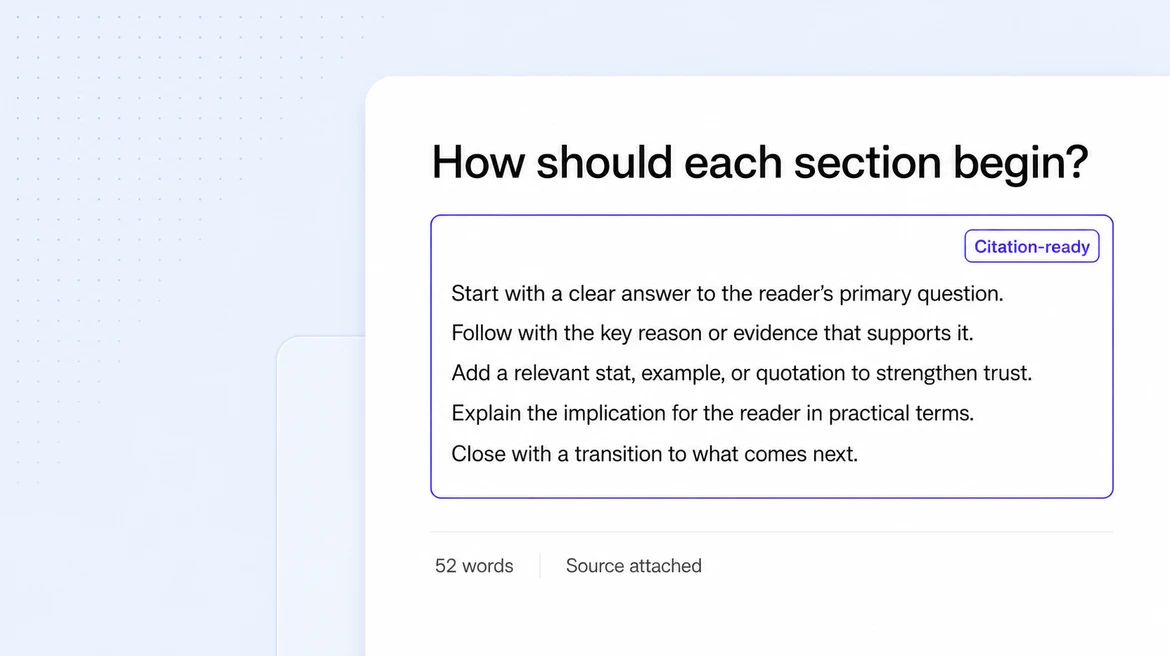
To optimize blog posts for AI answer engines, open with a direct 40-60 word answer, structure sections under question-based headings, keep each section self-contained at 200-400 words, source every claim, and add FAQPage or Article schema. Search is changing fast: more people ask ChatGPT, Perplexity, and Google AI Overviews a question and get a direct answer, often without clicking a single link. This guide walks through Answer Engine Optimization (AEO), how AI engines find your content, and the concrete steps you can take on every post to earn citations, plus a clear answer on content length and a publish-ready checklist.
What is Answer Engine Optimization (AEO) and How Does It Differ from SEO?
Answer Engine Optimization (AEO) is the practice of structuring content so AI models like ChatGPT and Google AI Overviews can read, trust, and cite it directly in their generated answers. It prioritizes machine readability and attribution over ranking in a list of blue links. AEO is often called Generative Engine Optimization (GEO), and the two terms describe the same goal.
Traditional SEO targets a ranking position in a list of links, hoping a human clicks through to your site. AEO targets something different: being used as a source inside a generated answer. With SEO, you compete for a click. With AEO, you compete to be the reliable passage an AI quotes or paraphrases. That distinction changes how you write, structure, and format every post.
The shift toward AI answers is well underway: AthenaHQ's State of AI Search 2026 report found that leading publisher sites have reported traffic declines of more than 50% since AI Overviews and similar answer features rolled out (source). When AI answers can pull that much traffic away from ranked links, being the cited source becomes a real growth channel.
The best practices for optimizing content for AI answer engines and GEO rest on three core principles:
- Authority signaling: Give the AI clear reasons to trust you, such as sourced claims, author expertise, and freshness signals.
- Structured information architecture: Organize content into clean, self-contained blocks that a machine can parse without guessing.
- Comprehensive entity coverage: Cover the topic and its related concepts fully, so the AI sees your page as a complete source.
These principles are the foundation for building trust with AI engines. AthenaHQ's methodology is built around AEO and GEO, helping brands earn visibility across generative engines. The rest of this guide turns these principles into steps you can apply today.
How Do AI Answer Engines Find and Use Your Content?
AI answer engines do not simply match keywords to a page and rank it. They run a multi-step process to build a single, synthesized response. Understanding that process helps you write content that fits each stage.
Here is how it works, in plain terms:
- Query fan-out: The engine takes your question and breaks it into several related sub-queries. One question about "AEO best practices" might fan out into searches about content structure, schema markup, and content length.
- Retrieval-Augmented Generation (RAG): The engine retrieves relevant passages from across the web to ground its answer in real sources. This is the retrieval step, and it is where your content either gets pulled in or gets skipped.
- Synthesis: The model combines the retrieved passages into a coherent answer, blending information from multiple sources.
- Citation: The engine attributes parts of the answer to specific sources, linking or naming the pages it relied on.
Your main job in AEO is to be the most reliable and easily parsed source for the RAG step. If the AI can quickly locate a clean, factual passage that answers the sub-query, your content becomes the natural choice to retrieve and cite.
This also changes how you measure success. In traditional search, you track a fixed ranking position for a keyword. In AI search, the same query can produce different answers each time, so the better metric is your mention rate: how often your brand or content appears across many AI responses. That is a meaningful strategic shift, because visibility now spreads across engines rather than sitting in one ranked list.
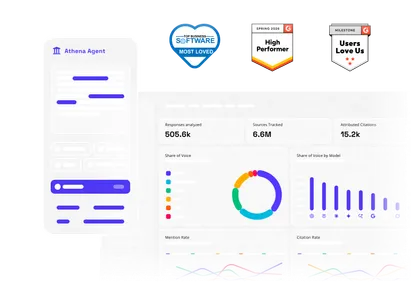
Tracking mention rate by hand is nearly impossible across so many prompts and platforms. Platforms like AthenaHQ track your mentions and citations across multiple engines, including ChatGPT, Gemini, and Claude, giving you a clearer picture of your real AI visibility.
What Are the Best Practices for Optimizing Blog Posts for AI?
The best practices for optimizing blog posts for AI answer engines come down to making your content easy for a machine to extract and easy for a reader to trust. Formatting matters here: short paragraphs, bullet points, and scannable sections all help AI models parse your writing cleanly [2]. Use the following practices on every post.
Adopt an 'Answer-First' Structure
Lead with the answer, then explain. When you open a section or post with a direct, self-contained response, you give the AI a ready-to-quote passage. The answer-first format makes your information easy to extract and verify [3].
Put your clearest 40 to 60 word answer at the top of each key section, before any background or context. A reader who skims gets the point immediately, and so does the retrieval step of an AI engine. Save the deeper explanation and examples for the paragraphs that follow.
Use Question-Based Headings
Write your H2s and H3s as the questions your readers actually ask. AI engines fan queries out into sub-questions, so a heading phrased as a question maps directly to how the engine searches. Question-based headings paired with self-contained answer blocks make each section easy to lift into an answer [4].
Match the phrasing to natural, conversational language. "How long should a blog post be for AI search?" works better than a vague label like "Length considerations." Each heading should signal exactly what the section below answers.
Prioritize Clarity and Factual Accuracy
AI engines favor sources they can verify. Back every claim, statistic, and figure with a credible source, and link to it. Content freshness and credibility both help you get quoted, so keep facts current and clearly sourced [1].
Write in clear, direct sentences and avoid vague hedging. State one idea per sentence and define any technical term the first time you use it. Accurate, well-sourced content signals authority, and authority is what earns the citation.
Implement Structured Data (Schema Markup)
Schema markup is code that tells AI and search engines exactly what your content means. Using JSON-LD schema markup helps machines understand your page structure without guessing [3]. It labels your FAQs, articles, and authors in a format engines read reliably.
Add schema that fits your content type. FAQPage schema suits a post with a question-and-answer section, while Article schema helps for standard blog posts. Schema markup helps AI understand and present your information accurately [2].
Focus on Entities and Comprehensive Coverage
An entity is a distinct concept, person, product, or place that an AI recognizes and connects to related ideas. Cover your main topic and the entities around it, so the engine sees your page as a complete source rather than a partial one.
Answer the obvious follow-up questions within the same post. If someone reads about AEO, they will likely want to know about schema, content length, and measurement, so address those too. Topical coverage and extractability, rather than sheer word count, are the primary drivers for AI to cite a source.
How Long Should Content Be for Optimal AEO Performance?
When people ask how long should content be for optimal AEO performance in generative AI, the honest answer is this: structure and depth matter far more than absolute word count. A well-structured 800-word article can outperform a poorly structured 3,000-word one. AI engines reward extractability, not length for its own sake.
That said, a data-informed range helps as a target. For B2B topics, the sweet spot lands around 1,200 to 2,500 words [5]. That range gives you room for genuine depth without drifting off topic or padding with filler.
Rather than fixate on total word count, plan by section count and length. Aim for roughly 6 to 10 H2 sections, and make each one a self-contained unit of about 200 to 400 words. Each section should answer its heading fully on its own, without depending on the section before it.
Here is why this approach works: the passages AI engines actually cite are short, typically 40 to 80 word self-contained blocks [5]. Your goal is to create many citation-worthy blocks within one article. Every clean, direct section becomes a candidate for retrieval, so a well-segmented post gives you more chances to get quoted.
Your AEO Checklist for Every Blog Post
Run through this checklist as a final quality check before you hit publish. Start with the highest-impact items and work down:
- Open with a 40 to 60 word direct answer to the post's main question, placed before any preamble.
- Start each section with a direct answer, then follow with explanation and examples.
- Use question-based H2s and H3s that match how readers phrase their queries.
- Source every claim as covered in Prioritize Clarity and Factual Accuracy, and verify each link resolves correctly.
- Use short paragraphs and lists to keep sections scannable for readers and parsable for AI.
- Implement relevant schema, such as FAQPage or Article markup, so engines understand your structure.
- Include a visible "last updated" timestamp to signal freshness and credibility.
Doing this by hand on every post takes real effort, especially at scale. Tools can simplify the work: AthenaHQ's Action Center gives you prioritized recommendations, so your team can apply these optimizations across many posts without guesswork.
Frequently Asked Questions
Does AEO replace traditional SEO for blog content?
No — AEO and SEO are complementary, not competing, practices. AI engines often retrieve their answers from pages that already perform well organically, pulling from established, well-ranked content. That means strong SEO fundamentals, like technical health, backlinks, and relevance, remain the foundation that AEO builds on, rather than something it replaces.
How quickly can a blog post start earning AI citations?
AI engines re-crawl the web continuously, so a well-structured post can appear in generated answers within days to weeks of publishing or updating it. That said, consistent, reliable visibility across engines and prompts tends to build over months, as the content accumulates trust signals and gets retrieved repeatedly.
Should I rewrite old blog posts or write new ones for AEO?
Start by restructuring existing posts that already have authority and traffic. Adding an answer-first opener, question-based headings, and schema markup to a proven post often moves faster than creating net-new content from scratch, since you are building on established trust signals rather than starting from zero.
Putting It All Together: From Strategy to Citation
The move from traditional SEO to AEO reflects a real change in how people find information. You are no longer only competing for a click on a ranked link. You are competing to be the trusted source an AI quotes in its answer. That requires content that is structured, authoritative, and machine-readable.
Everything in this guide points to the same goal: serve the AI's need for reliable, easily extractable information. Lead with answers, phrase headings as questions, source your claims, add schema, and segment your content into self-contained blocks. Do that consistently, and your posts become citable assets across ChatGPT, Perplexity, Gemini, and beyond.
AEO is an ongoing practice, not a one-time fix. Engines evolve, your competitors adapt, and fresh content wins. To keep building momentum, explore the Top 10 Generative Engine Optimization Tools to Try in 2026 and choose the workflow that fits your team. Start optimizing one post today, measure your mention rate, and refine from there.
Citations
- https://webflow.com/blog/ai-search-seo
- https://idgadvertising.com/how-to-optimize-your-content-strategy-for-answer-engines-understanding-the-new-era-of-ai-seo
- https://www.contentstack.com/blog/ai/how-to-optimize-content-for-ai-answer-engines-aeo
- https://www.blissdrive.com/blog-ai-visibility/aeo-content-structure
- https://www.mqlmagnet.com/post/aeo-content-length-data
Become the Brand AI Trusts
See, Act, and Win on AI Search and Beyond
Keep Reading
How to Write AI-Digestible Content
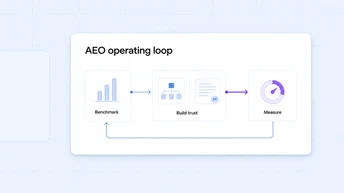
The Enterprise Guide to Answer Engine Optimization (AEO)
Enterprise guide to Answer Engine Optimization (AEO). Learn how to gain a competitive advantage in AI search and attribute revenue to your AEO program.
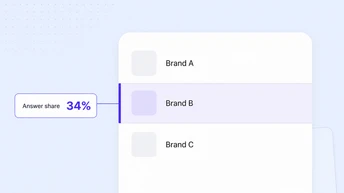
What Is AI Share of Voice?
What is share of voice in AI search? Learn how this new metric measures brand presence in AI answers and discover how to calculate, track, and improve it.
See AthenaHQ in Action
 AthenaHQ
 Rootly
10x Increase in Citation Rate
GEO became Rootly's #1 growth pillar. With ~10x citation rate growth and +126% mention rate on non-branded prompts, Rootly transformed AI Search into an executive-level operating channel.
AthenaHQ Lago
Lago50% Increase in Demos from AI Search
Lago achieved a 50% increase in demos from AI Search after implementing Athena. With 11x growth in AI Overview impressions and exploding citations, Athena became their command center for GEO.
AthenaHQ Nuvadermis
3x Share of Voice in 3 Months
Nuvadermis grew Share of Voice 3x in 3 months, with on-page citation rate climbing to 20%+ against a 4% category average, taking share from scar treatment heavyweights.