How to Optimize Content for AI Search Engines
Learn how to optimize content for AI search engines. Get cited by Google AI Overviews & ChatGPT with our step-by-step Generative Engine Optimization guide.

Alan Yao
Co-Founder, CTO of AthenaHQ
How to Optimize Content for AI Search Engines
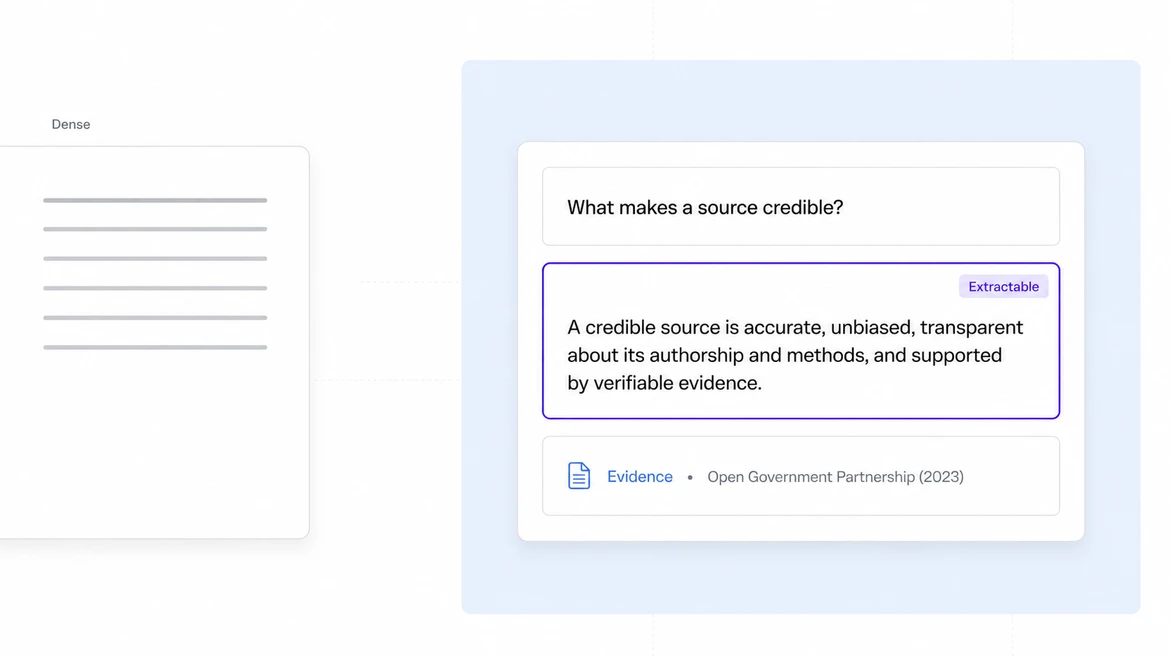
To optimize content for AI search engines, structure it around questions with direct, concise answers of 40-60 words. Use clear headings, lists, and semantic HTML to make content easy for machines to parse. Build authority with original data and expert quotes, and ensure the site is fully accessible to AI crawlers.
As of July 2026, generative AI platforms such as Google AI Overviews, ChatGPT, and Perplexity have become primary channels for finding information. Success in traditional SEO does not guarantee visibility in these AI-generated responses.
To be discovered and cited by these platforms, brands need a dedicated strategy for AI search optimization. This guide provides an actionable framework for getting content included in AI answers, driving referral traffic, and building authority in this landscape.
How do you optimize content for AI search engines?
AI search engines, or generative engines, do not process content the way human readers do. They break it into structured data points, identify patterns, and assemble answers from sources they trust and can parse easily. Research from Microsoft shows that AI models break content into smaller pieces, rank them individually, and assemble them into a final response.
This process is known as Generative Engine Optimization (GEO). It requires a different approach than traditional SEO. Classic fundamentals still apply, but GEO prioritizes machine readability, factual density, and verifiable authority.
1. Structure for Clarity and Extraction
Content structure is the most important factor for AI visibility. AI models favor content that is modular and predictable, which makes it easier to extract specific facts, steps, or definitions.
Structure H2s and H3s as direct questions, such as "What is a CRM?" This aligns content with actual user queries. Follow each heading with a concise, 40-60 word answer. This format works well for snippets and AI summaries.
Use structured formats where appropriate: bullet points for features, numbered lists for processes, and tables for comparisons. This structured data is easier for AI to parse and reformat. Write each section so it can stand on its own; an AI should be able to extract a section out of context and have it still function as a complete thought.
2. Build Verifiable Authority
AI models are designed to surface trustworthy information and evaluate authority using signals beyond backlinks.
The following signals help build that authority:
- Add author names and short bios that state their relevant experience or credentials directly on the page.
- Include original research, survey data, statistics, or quotes from industry experts. If original data is unavailable, contact two or three experts in the relevant niche, ask a specific question, and quote their answer directly.
- Include verifiable facts, figures, and specific examples. Generic, unsupported claims are less likely to be cited.
- Cultivate brand mentions on authoritative, topically relevant sites, including unlinked mentions. One study found that brand mentions can be a more powerful signal than traditional backlinks for establishing topical relevance in AI systems. These mentions can be earned through guest posts, answers on industry forums, or quotes in trade publications covering the relevant space.
On-page content alone is not enough to establish authority. Models build confidence in a brand from consistent information repeated across many platforms, not just from a single well-optimized page. Broad entity coverage across third-party sources makes a brand more interpretable to AI models, since it gives the model multiple independent confirmations of the same facts.
This cross-channel presence matters more than most brands assume. AthenaHQ's State of AI Search 2026 report found that AI engines cite a brand's own domain in only about 16% of responses on average. That means third-party presence — reviews, forums, trade publications, and other independent sources — carries most of the citation load, and a strategy focused solely on owned content will miss the majority of citation opportunities.
3. Ensure Technical Accessibility
If AI crawlers cannot access content, they cannot cite it. Correct technical configuration is foundational.
First, verify that robots.txt is not blocking crawlers from important pages. Next, implement schema markup — including FAQPage, HowTo, and Article schema — to explicitly define page content for search engines.
Finally, consider configuring an llms.txt file. This is an emerging standard that provides more granular control over how generative AI models interact with content. To set one up, create a plain text file named llms.txt, place it in the site's root directory, and list the pages to prioritize along with brief descriptions of each. See the guide to AI SEO optimization for more detail.
How do ChatGPT, Perplexity, and Google AI Overviews differ in how they select sources?
Generative engines do not use identical methods. Each platform uses different models and processes to source and present information.
Optimizing for one platform does not guarantee visibility on another. The table below summarizes how major platforms differ:
Success on Google does not automatically carry over to other platforms. AthenaHQ's State of AI Search 2026 report found that AI engines assemble answers very differently from a traditional results page: each model cites between roughly 6 and 27 distinct domains per response, and community and reference platforms dominate those citations. Reddit alone accounts for about 21.9% of off-page citations across models — rising to roughly 52% for Grok — followed by YouTube at 10.3% and Wikipedia at 7.3%, sources that rarely occupy Google's first page for commercial queries. This underscores the need for a distinct 2026 content strategy focused on multi-platform visibility.
How Do AI Answer Engines Decide Which Brands to Recommend?
AI answer engines do not consult a single ranked list of pages the way traditional search does. Instead, they read across many documents at once and weigh signals of credibility, consistency, and clarity before deciding which brand to surface in a response. Three factors matter most:
- Entity clarity. Models need complete, stable information about a brand — what it does, who it serves, and how it's described — that stays consistent across its own site and third-party sources. Fragmented or conflicting descriptions make a brand harder for a model to confidently reference.
- Citation strength. Mentions from trusted, independent publications act as votes of confidence that a model weighs when deciding what to cite (how AI search engines decide which brands to cite).
- Factual consistency. Models cross-reference claims across sources before repeating them (how AI answer engines choose brands, and why SEO still matters). When a brand's own data contradicts what the wider web says about it, models hesitate to cite it at all.
Beyond these credibility signals, engines also favor content that is structurally easy to lift and reuse — extractable formats like Q&A blocks and data tables tend to get cited more often than dense, unstructured prose.
How Long Should Content Be for AI Search?
There is no single ideal word count for AI search optimization. Structure and depth matter far more than raw length — a well-structured 800-word article can outperform a poorly structured 3,000-word one, because AI engines cite discrete, well-formed passages rather than rewarding total document size.
That said, for B2B topics a practical range is 1,200 to 2,500 words, based on data across AEO content performance. This range tends to give a topic enough room for genuine depth without diluting it with filler.
Rather than planning around a total word count, plan by section: aim for roughly 6 to 10 question-based H2 sections of 200-400 words each, with every section written to stand on its own as a complete thought. This matters because the passages AI engines actually cite are short — typically 40-80 word blocks — so a well-segmented article creates many independent citation candidates rather than a single long argument that only makes sense in full. This guidance applies whether the content being optimized for AI answer engines is a blog post, a long-form guide, or a landing page.
What content formats do AI engines cite most?
AI engines favor content that is structured, scannable, and easy to decompose into discrete parts. Using these formats increases the likelihood of being selected as a source, and applying them consistently is what makes content AI-digestible — whether it's a blog post, landing page, or long-form guide.
Q&A and FAQ-style blocks are effective: a clear question followed by a direct answer is well-suited for AI extraction, particularly when paired with FAQPage schema. Numbered and bulleted lists — step-by-step guides, feature lists, "best of" roundups — are easily parsed and repurposed into summarized answers, and each section should remain coherent as a complete thought even when extracted independently by an AI model.
Definition paragraphs are also effective. Begin articles or sections with a bolded term followed by a concise definition, for example: "Generative Engine Optimization (GEO) is the practice of..." Comparison tables are valuable as well. Tables that lay out features, pricing, or pros and cons are highly structured and information-dense, making them well-suited for AI-generated summaries.
Step-by-Step AI Content Optimization Checklist
Use this checklist to audit existing content or guide the creation of new articles.
- Identify a core question your article will answer.
- Structure H2s and H3s as direct questions related to the main topic.
- Write a concise answer (40-60 words) directly below each heading.
- Break up long paragraphs into shorter, 2-3 sentence blocks.
- Use bullet points or numbered lists for processes, steps, or features.
- Incorporate original data, a unique statistic, or an expert quote.
- Add a byline with the author's name and credentials.
- Add relevant schema markup (
Article,FAQPage,HowTo). - Check that the page is not blocked by
robots.txtormetatags. - Monitor your AI visibility to see if your changes are leading to more citations. A platform like AthenaHQ can help you track brand mentions and citations across generative engines.
Frequently Asked Questions
How is AI SEO different from traditional SEO?
Traditional SEO optimizes for ranking algorithms that return a list of links. AI SEO, or Generative Engine Optimization, optimizes for models that extract, synthesize, and cite specific facts within an answer. It prioritizes modular structure, factual density, and demonstrable authority over signals like backlink volume alone, though backlinks and technical SEO remain relevant.
Will optimizing for featured snippets help me rank in AI Overviews?
It can help, since Google AI Overviews draws heavily from content already ranking well in traditional search, including featured snippets. However, snippet optimization alone does not guarantee inclusion in other engines like ChatGPT or Perplexity, which source content differently and often cite pages that do not appear on Google's first page.
How do I track my brand's visibility in AI answers?
Visibility tracking requires monitoring how often a brand is mentioned or cited across generative engines such as ChatGPT, Perplexity, and Google AI Overviews. Dedicated platforms, including AthenaHQ and other AI-visibility tools, track mentions and citations across these engines, providing data on which content gets cited and which competitors appear alongside it.
What are the best tools for AI search optimization?
Effective tools typically fall into three categories: AI-visibility trackers that monitor mentions and citations across engines (such as AthenaHQ), schema markup generators for structured data, and traditional SEO platforms for technical audits and content analysis. Selection depends on whether the priority is monitoring, content structuring, or technical accessibility.
Should I rewrite existing blog posts or create new content for AI search?
Start by restructuring existing posts that already have authority — adding answer-first openers, question-based headings, and schema to a proven page typically moves faster than net-new content, since it builds on established trust signals rather than starting from zero. Create new pages only where a query has no logical home among existing content.
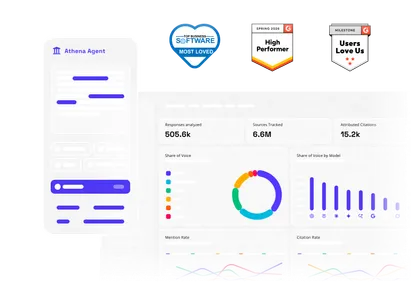
Become the Brand AI Trusts
See, Act, and Win on AI Search and Beyond
Keep Reading
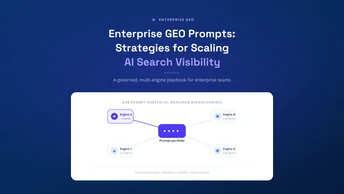
Enterprise GEO Prompts: Strategies for Scaling AI Search Visibility
Enterprise GEO provides a practical way for large teams to organize buyer questions, measure answers across engines, find citation gaps, invest in changes that carry real business value, and ultimately scale their AI search visibility.
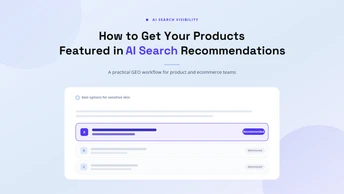
How to Get Your Products Featured in AI Search Recommendations
Actually getting your products featured in AI search recommendations requires a repeatable process to sufficiently cover your grounds across product data, crawl access, third-party evidence, comparison content, and performance.
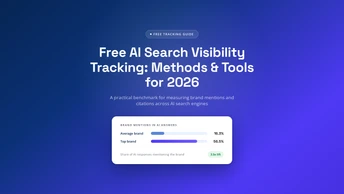
Free AI Search Visibility Tracking: Methods & Tools for 2026
See AthenaHQ in Action
 AthenaHQ
 Cozy Earth
The Most-Cited Sleepwear Brand in AI Search
Cozy Earth used AthenaHQ to protect its lead in sleepwear, identify a loungewear opportunity, and give its two-person content team a clearer way to prioritize what to publish next.
AthenaHQ Rootly
10x Increase in Citation Rate
GEO became Rootly's #1 growth pillar. With ~10x citation rate growth and +126% mention rate on non-branded prompts, Rootly transformed AI Search into an executive-level operating channel.
AthenaHQ Lago
Lago50% Increase in Demos from AI Search
Lago achieved a 50% increase in demos from AI Search after implementing Athena. With 11x growth in AI Overview impressions and exploding citations, Athena became their command center for GEO.