How to Improve GEO Rankings with AI Visibility Monitoring Tools

AthenaHQ
Action on AI Search
How to Improve GEO Rankings with AI Visibility Monitoring Tools
The world of search is changing faster than ever. With AI-powered platforms like ChatGPT, Gemini, and Google's AI Overviews, finding information is no longer just about clicking links. As of June 2026, over 35% of search results feature AI-generated answers, and this number is only growing. To stay visible, your brand needs a new strategy: Generative Engine Optimization (GEO). This guide provides a clear, step-by-step framework for using AI visibility monitoring tools to improve GEO rankings and win in the new era of search.
What is GEO (Generative Engine Optimization)?
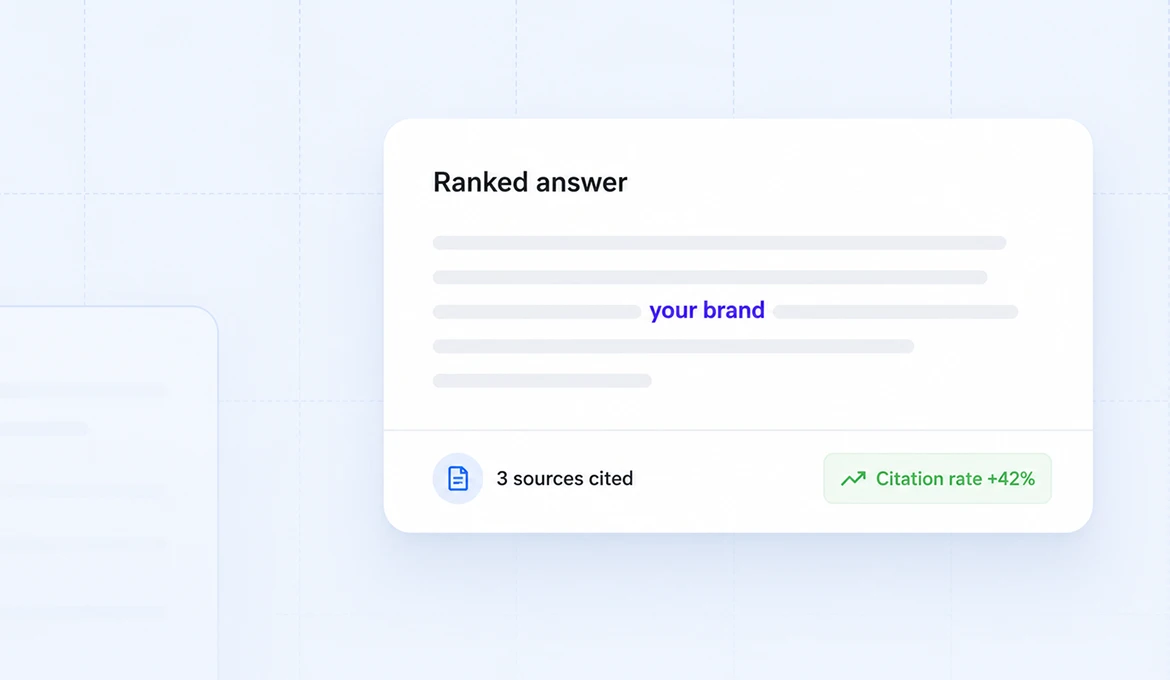
Generative Engine Optimization (GEO) is the practice of optimizing your content to be found, understood, and cited by AI models. The goal of GEO isn't to rank a webpage at the top of a results list; it's to get your brand cited as a trusted source directly within the AI's answer.
While traditional SEO focuses on keywords and backlinks to earn clicks, GEO focuses on structuring information so AI can easily extract and feature it. As experts in the field have noted, optimizing for AI requires a different mindset focused on quotability and authority [1]. You can learn more about the differences in our guide, GEO vs Traditional SEO: Why AI Search Optimization Wins. The core principles of GEO include:
- Authority Signaling: Proving your expertise through expert attribution, transparent data, and strong citation networks.
- Structured Information Architecture: Using clear, hierarchical headings (H1, H2, H3), semantic HTML, and data tables that help AI parse your content.
- Comprehensive Entity Coverage: Thoroughly mapping out topics and clarifying the relationships between different concepts, people, and places.
A complementary practice is Answer Engine Optimization (AEO), which focuses on creating content that is easily cited and integrated into AI responses. This often involves using comprehensive schema markup and a question-based content structure.
Why AI Visibility Monitoring is Crucial for GEO Success
You can't improve what you can't measure. AI-generated answers are dynamic and can vary significantly across different platforms, user locations, and languages. Traditional SEO tools were not built for this new landscape; they can't tell you if you're being cited by ChatGPT or what your share of voice is in Perplexity.
This is where AI visibility monitoring platforms come in. They are essential for any serious GEO strategy. These tools provide a unified view of your performance across the AI ecosystem by tracking the metrics that matter now:
- Brand Mentions & Citation Tracking: Knowing if and how often AI platforms are mentioning your brand.
- Sentiment Analysis: Understanding the context of your mentions—whether they are positive, neutral, or negative—to help manage your online reputation.
- Source Intelligence: Seeing which websites and documents AI engines are citing when they talk about your brand or industry.
- Competitor Benchmarking: Tracking your share of voice against competitors for the most important user prompts.
A dedicated platform is the only way to get a clear and accurate picture of your performance and effectively track your brand in AI search.
A Step-by-Step Guide to Improving GEO Rankings with AI Visibility Tools
Improving your GEO rankings is a systematic process. Follow this actionable playbook to turn insights from AI visibility tools into a winning strategy.
Step 1: Establish Your Baseline with a GEO Audit
Before you can improve, you need to know where you stand. A GEO audit gives you a snapshot of your current AI search visibility.
- Identify core prompts: Map out the key questions your customers ask at every stage of their journey. Think about awareness, consideration, and decision-making queries.
- Run a visibility check: Use a monitoring tool to see how you perform across major AI platforms like ChatGPT, Gemini, Perplexity, and Google AI Overviews. Are you mentioned at all?
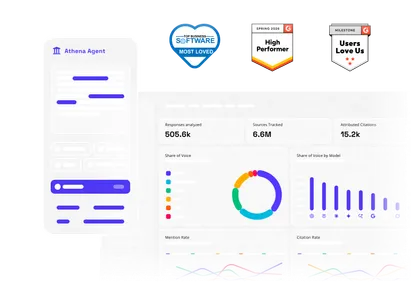
- Document baseline metrics: Record your initial brand mention rate, citation frequency, and share of voice for your target prompts. Platforms like AthenaHQ provide this Brand Intelligence with a 360-degree view of your brand presence from a single, user-friendly Olympus dashboard.
Step 2: Conduct In-Depth Competitor Benchmarking
Once you have your baseline, it's time to understand the competitive landscape. This is where you'll find your biggest opportunities.
- Use an AI visibility tool to identify which competitors are being cited for your target prompts.
- Analyze why they are being cited. What content formats are they using? What data or sources are they referencing? Are they leveraging user-generated content from sites like Reddit?
- With AthenaHQ, you can use Competitor Benchmarking features to run prompt-level performance comparisons and monitor your share of voice. For an example of this analysis in action, see our breakdown of Salesforce vs. HubSpot: Who's Dominating CRM AI Search?.
Step 3: Identify and Prioritize Content Gaps and Opportunities
Your audit and competitor data will reveal where you need to focus your efforts. The next step is to turn that data into an actionable content plan.
- Use the insights to find high-value prompts where your brand has low or no visibility.
- Pinpoint "quick win" opportunities where refreshing or restructuring existing content could earn a citation without starting from scratch.
- Advanced platforms can help automate this process. AthenaHQ uses content gap analysis and autonomous "ACE" agents to analyze these gaps and even draft optimizations for you.
Step 4: Execute a Data-Driven Content Optimization Strategy
Now it's time to create and optimize "citation-ready" content. This is how to optimize content for AI citations and improve GEO rankings. Focus on these best practices for using real-time AI monitoring to improve GEO rankings:
- Increase Fact Density: Pack your content with verifiable facts, statistics, and details. Research shows that adding citations and expert quotes can increase visibility by over 40%.
- Optimize for Structure: Use clear headers (H2s and H3s), bullet points, and tables to make information easy for AI to parse. Implement schema markup like
FAQPageandArticleto give AI more context, a core tactic in modern AI-first content optimization [2]. - Signal Authority: Feature quotes from internal or external experts. Highlight proprietary data from original research your company has conducted. Link out to credible sources like academic studies or government reports to build trust.
- Answer Questions Directly: Structure your content to provide a concise, direct answer at the beginning of a section before elaborating with more detail. This aligns with many effective GEO strategies [3].
A dedicated platform's Action Center, like the one in AthenaHQ, can provide targeted on-page and off-page optimization strategies to guide your efforts. For a deeper dive, check out our guide on How to Optimize Content for Answer Engines.
Step 5: Monitor, Iterate, and Measure Impact
GEO is not a "set it and forget it" strategy. It requires a continuous loop of optimizing, monitoring, and iterating.
- Continuously monitor your GEO metrics: Keep a close eye on your unified GEO score, citation rate, and share of voice to see how your optimizations are performing over time.
- Connect AI visibility to business outcomes: The ultimate goal is to show how increased mentions and citations lead to more website traffic, high-quality leads, and revenue.
- Measure ROI: Use a platform with native integrations to prove the value of your GEO efforts. AthenaHQ's integrations with Google Analytics, Search Console, and Shopify enable direct revenue attribution from AI search visibility.
Our case studies show the tangible results of this process, from a 10x growth in ChatGPT traffic for AutoRFP.ai to a 50% increase in demos booked from AI search for Lago.
Choosing the Right AI Visibility Tool: Key Features of AthenaHQ
Not all AI visibility tools are created equal. When choosing a platform, look for one that provides an end-to-end solution. AthenaHQ is a comprehensive GEO platform built to help brands get discovered, with high user ratings of 4.8/5 on G2. Here are the key features that set a leading platform apart:
- Multi-Engine Coverage: A great tool must track all major AI platforms, including ChatGPT, Gemini, Claude, Perplexity, and Google AI Overviews.
- Comprehensive Brand Intelligence: Look for a unified dashboard that provides a 360-degree view of your brand, including mentions, sentiment, and a unified GEO score.
- Proprietary Citation Engine: Advanced technology like the Athena Citation Engine (ACE) can predict the likelihood of your content being cited and help you understand which sources are influencing AI answers.
- Actionable Recommendations & Automation: The platform should deliver targeted optimization strategies and identify content gaps, saving your team valuable time.
- Revenue Attribution & Integrations: Choose a tool with native integrations that connect your GEO efforts directly to business KPIs like traffic, leads, and revenue.
- Geo-Localization and Multi-Language Support: For global brands, the ability to track performance across different regions and languages is non-negotiable.
To see how AthenaHQ stacks up against other tools, check out our Profound vs AthenaHQ comparison.
Take Control of Your AI Visibility
Improving your GEO rankings isn't a mystery—it's a systematic process powered by data. By using a powerful AI visibility monitoring tool, you can audit your presence, benchmark against competitors, optimize your content, and measure the direct impact on your bottom line. In the age of AI, being cited is the new ranking.
Ready to take control of your AI search visibility? See how AthenaHQ can help you get cited and drive revenue.
Citations
Become the Brand AI Trusts
See, Act, and Win on AI Search and Beyond
Keep Reading
Top 10 Generative Engine Optimization Tools To Try in 2026
The best GEO tools to get your brand mentioned when AI search engines answer questions in your industry. Search traffic is predicted to drop 25% by 2026.
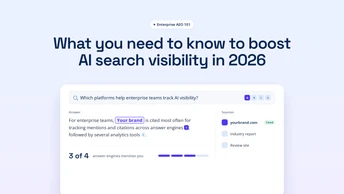
Enterprise AEO 101: What You Need to Know to Boost AI Search Visibility in 2026
Learn how enterprise AEO and GEO can improve AI search visibility in 2026, from prompt measurement and citation-ready content to platform evaluation and attribution.
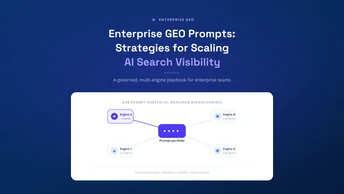
Enterprise GEO Prompts: Strategies for Scaling AI Search Visibility
Enterprise GEO provides a practical way for large teams to organize buyer questions, measure answers across engines, find citation gaps, invest in changes that carry real business value, and ultimately scale their AI search visibility.
See AthenaHQ in Action
 AthenaHQ
 Cozy Earth
The Most-Cited Sleepwear Brand in AI Search
Cozy Earth used AthenaHQ to protect its lead in sleepwear, identify a loungewear opportunity, and give its two-person content team a clearer way to prioritize what to publish next.
AthenaHQ Rootly
10x Increase in Citation Rate
GEO became Rootly's #1 growth pillar. With ~10x citation rate growth and +126% mention rate on non-branded prompts, Rootly transformed AI Search into an executive-level operating channel.
AthenaHQ Lago
Lago50% Increase in Demos from AI Search
Lago achieved a 50% increase in demos from AI Search after implementing Athena. With 11x growth in AI Overview impressions and exploding citations, Athena became their command center for GEO.